Kitesurfing with Back or Knee Issues: Is It Compatible?
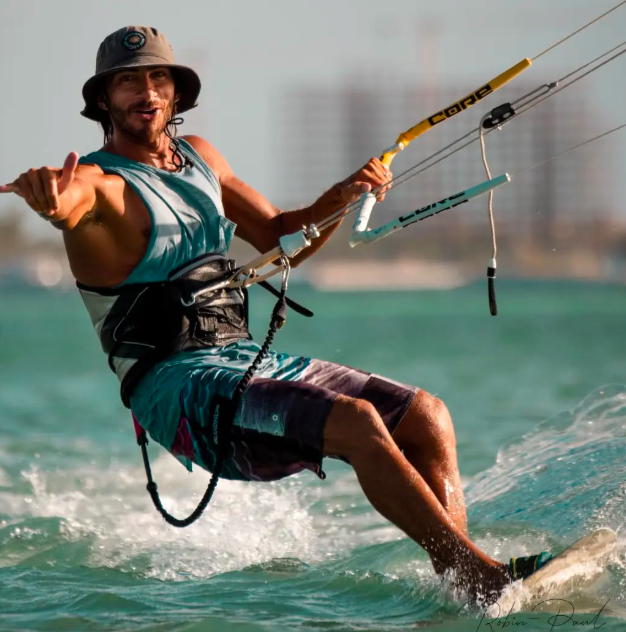
Short answer: in many cases yes, it's compatible, but it depends on your specific condition and it's important to be honest about it. Kitesurfing doesn't require brute strength or constant joint impact (unlike running, for example), but it does involve some knee torsion and lower-back load while holding your posture. The key is telling us your situation before booking.
Why it's not an automatic "yes" or "no"
We're not doctors and can't diagnose your case — but as instructors with years of experience, we can tell you what the sport demands so you (ideally also checking with your doctor or physiotherapist) can evaluate whether it's for you.
What kitesurfing physically demands
- Knees: sustained flexion and some torsion when maneuvering the board — can be an issue if you have active ligament or meniscus injuries
- Lower back: holding your posture against the kite's pull involves constant isometric load in the lumbar area
- Shoulders and wrists: less demanding than people think, since the harness absorbs most of the force, not your arms
What helps if you have a pre-existing condition
- Private 1:1 lessons at your own pace, with breaks whenever you need them
- Shorter sessions (2 hours instead of 3) to avoid overload
- Gentle wind in your first lessons — less power means less strain on the body
- Shallow water like Óbidos Lagoon, which reduces the stress of falls and swimming
Our honest recommendation
Tell us your specific situation on WhatsApp before booking. With that info we'll give you an honest opinion based on experience teaching different profiles — and if needed, we'll suggest checking with a health professional first.