What Is the Wind Window in Kitesurfing? Explained Simply
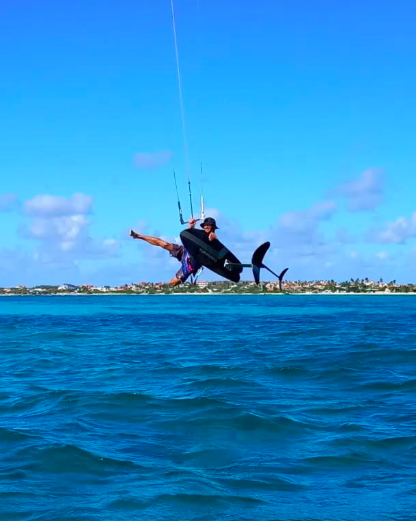
Short answer: the wind window is the three-dimensional, half-dome-shaped area where your kite can fly, always downwind relative to you. Understanding it is THE key to kitesurfing: the kite's position within that window determines how much power it generates — from none at all to enough pull to lift you off the ground.
The mental image: a giant clock
Stand with your back to the wind and stretch out your arms: picture a half-clock in front of you, from 9 (to your left, touching the ground) through 12 (above your head) to 3 (to your right). The kite can only fly within that half-dome.
The zones of the window
The edge of the window — neutral zone
The entire perimeter of the half-dome (9, 12, 3, and the arc between them). There the kite flies with minimal pull: it's where you "park" it when you don't want power. 12 o'clock (straight above your head) is called the zenith.
The center of the window — power zone
The closer the kite passes to the center of the dome, the more directly the wind hits the fabric and the more power it generates. A kite crossing the center of the window pulls with tremendous force — that's the force you use (deliberately and under control) for the water start.
Why it's the first thing you're taught
Every beginner scare has the same root cause: the kite entered the power zone without the person meaning it to. Once you understand the window, power stops being a surprise and becomes a tool you activate when you need it.
From theory to practice in the same lesson
Following IKO methodology, you first explore the edge of the window with the kite (feeling where there's power and where there isn't), and only toward the end of the first lesson does the theory fully click — because you've already lived it with your hands on the bar. At Óbidos Lagoon, with waist-deep water and a radio helmet, this process is safe and even fun.
👉 Book your first lesson on WhatsApp | See the Discovery course →